


Why Should Facility Owners Invest in Industrial Painting?
Facility owners invest in industrial painting because the cost of not doing so is significantly higher. A professionally applied coating system protects structural steel and concrete from corrosion, supports workplace safety through compliant floor markings and fire-retardant coatings, and extends asset life by decades, deferring far more expensive capital replacements. It also improves facility aesthetics in ways that directly affect productivity, client perception, and business outcomes. Modern industrial coatings align with sustainability goals through low-VOC formulations and extended service life, which reduce material consumption over time. For any facility operating in Toronto, the GTA, or Southern Ontario, engaging the right industrial painting companies and specifying the right coating system for your specific exposure conditions is one of the highest-return maintenance decisions available.
Industrial painting is one of the most consequential investments a facility owner or manager can make, and one of the most misunderstood. It is not a cosmetic upgrade. It is a technical discipline that determines how long your building lasts, how safely your team operates inside it, how your facility is perceived by clients and buyers, and how responsibly your operation meets today’s environmental expectations.
This guide brings together everything you need to know about industrial painting: what it is, how it differs from regular painting, what benefits it delivers, how it transforms facility aesthetics, and how it contributes to sustainability goals. Whether you are managing a manufacturing plant in Brampton, a warehouse in Mississauga, or a processing facility anywhere across Southern Ontario, this is the reference you need before engaging industrial painting companies or painting contractors in Toronto.
What Is Industrial Painting?
Industrial painting is the application of high-performance coating systems to surfaces in manufacturing facilities, warehouses, processing plants, power stations, water treatment facilities, and other heavy-use environments. The surfaces involved include structural steel, concrete floors, metal ceilings, silos, storage tanks, machinery, and building exteriors — components that face conditions no commercial paint product is engineered to handle.
The defining characteristic of industrial painting is engineering. Every project begins with an analysis of the substrate, the environmental conditions it faces, and the performance requirements the coating must meet. Industrial painters work with materials like epoxies, polyurethanes, zinc-rich primers, intumescent coatings, and fire-retardant systems — products selected for specific chemical resistance, temperature tolerance, adhesion profiles, and service life expectations.
What makes industrial painting different from conventional painting comes down to three things: the complexity of the materials, the precision of the process, and the consequences of failure. A failed coating on a structural steel column, a chemical storage tank, or an epoxy floor system can halt production, compromise safety, or result in regulatory non-compliance. Professional industrial painters deliver solutions that are engineered to perform, not just applied.
For a deeper introduction to how industrial painting works and what separates it from general contracting, read: What Is Industrial Painting? A Complete Beginner’s Guide
Who Needs Industrial Painting Services?
Industrial painting companies in Toronto serve a wide range of facilities across diverse sectors. Understanding which facility types rely on industrial coatings and why — helps clarify the scope of the work.
Manufacturing plants represent the largest client segment. Production floors require epoxy coating systems that resist forklift traffic, chemical spills, oil contamination, and continuous mechanical wear. Structural steel and ceiling systems need protective coatings that resist corrosion and maintain reflectivity for lighting efficiency. Machinery requires specialized coatings that handle thermal cycling and chemical exposure while keeping surfaces cleanable.
Warehouses and distribution centers rely on durable floor coatings for high-traffic concrete surfaces, protective coatings for metal racking structures, and expansive ceiling repaints that improve light distribution and cleanliness standards.
Chemical processing plants demand coating systems with resistance to corrosive substances and, in some cases, regulatory compliance with specific containment standards. Secondary containment tank painting is a specialized service that requires materials and application methods most general contractors cannot deliver.
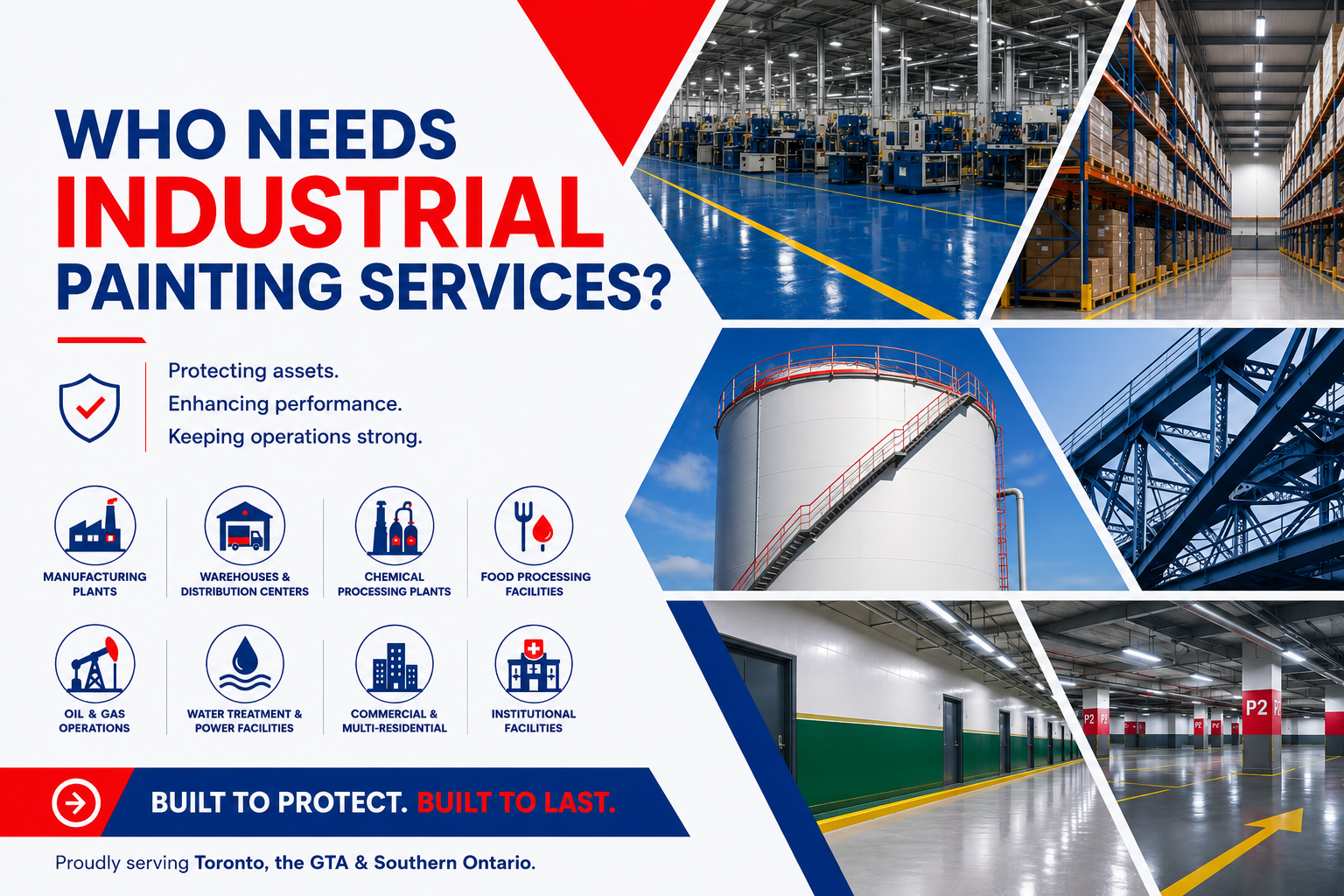
Food processing facilities require FDA-compliant, antimicrobial coating systems that meet hygiene standards and can withstand aggressive cleaning protocols. This is a category where coating selection errors carry regulatory and liability consequences.
Oil and gas operations need corrosion protection for tanks, pipelines, structural steel, and offshore platforms — environments where coating failure accelerates structural degradation at significant replacement cost.
Water treatment plants, power generation facilities, and pharmaceutical manufacturing sites all rely on industrial painting to maintain operational integrity. Multi-residential buildings benefit from industrial painting techniques in parkades, mechanical rooms, and on exterior metal cladding. Even institutional facilities like hospitals and schools use industrial coatings in high-traffic areas requiring exceptional durability.
The common thread across all of these facilities is that the coating system is a functional component of the building, not a decorative afterthought.
Serving your facility type? Induspray works with manufacturers, warehouse operators, processing plants, and commercial building owners across Toronto, the GTA, and Southern Ontario. Request a free price estimate today.
The Purpose and Benefits of Industrial Painting
Understanding why facilities invest in industrial painting — beyond appearance — is what separates informed buyers from those who undervalue the work until something fails.
For a detailed look at the full purpose and value of professional industrial coatings, read: What Is Industrial Painting? A Guide to Its Purpose and Benefits
Corrosion Protection
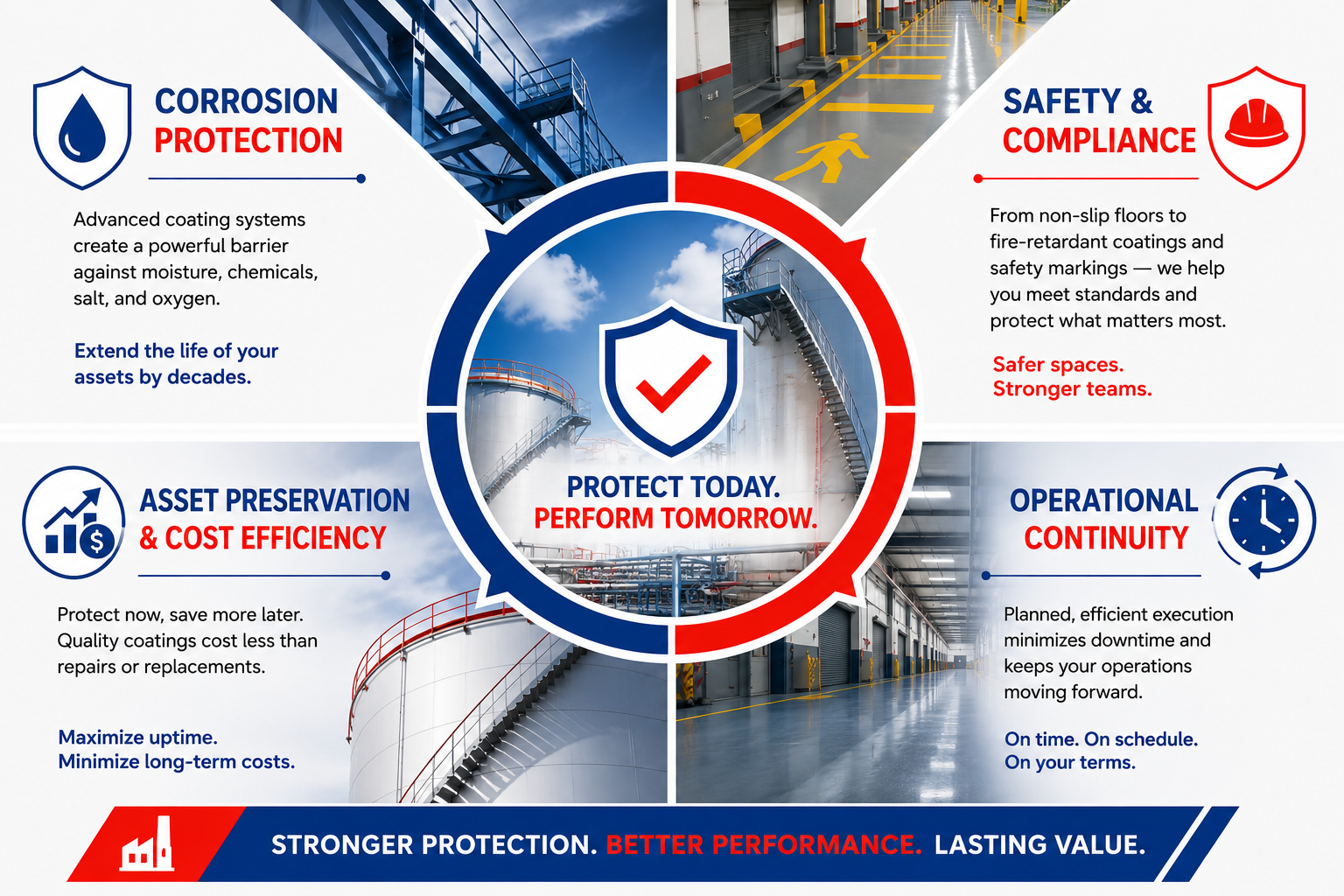
Steel corrodes. Concrete degrades. Both processes accelerate dramatically in the presence of moisture, chemicals, salt, temperature cycling, and oxygen. Corrosion is the primary cause of structural degradation in industrial facilities, and industrial coating systems are the front line of defense against it.
Zinc-rich primers deliver galvanic protection to steel substrates, sacrificing the zinc coating before the steel itself is attacked. Multi-coat epoxy systems create physical barriers that prevent moisture and corrosive agents from reaching the substrate. Polyurethane topcoats add UV resistance and chemical resilience to exterior applications. When properly applied over correctly prepared surfaces, these systems extend the service life of structural components by decades — dramatically reducing the long-term capital expenditure associated with replacement.
Safety and Compliance
Industrial environments carry complex safety obligations, and properly applied coatings contribute directly to meeting them. Non-slip epoxy floor coatings reduce accident risk in high-traffic zones, wet areas, and locations exposed to oil or chemical spills. Fire-retardant and intumescent coatings provide critical passive protection on structural steel, expanding under heat to form an insulating char layer that delays structural failure during a fire event.
Color-coded floor line painting and pedestrian safety walkway marking systems are also components of an industrial painting scope. Yellow designates caution zones. Red identifies fire safety equipment. Green indicates emergency exits and safety equipment. These visual systems, when precisely executed by professional painters, create clear, consistent cues that protect employees and comply with workplace safety requirements.
Asset Preservation and Cost Efficiency
A professional industrial painting project is one of the highest-return maintenance investments available to a facility owner. Repainting a concrete floor before degradation advances costs a fraction of what floor replacement costs after coating failure allows moisture infiltration and freeze-thaw damage to attack the slab. Repainting structural steel costs significantly less than replacing it.
The economics are straightforward: a well-specified coating system, properly applied, delays or eliminates the need for much more expensive capital replacements. Industrial painting companies with deep coating knowledge and supplier relationships — like Induspray — help clients select systems that optimize the balance between upfront cost and total service life, rather than defaulting to the cheapest option that fails early.
Operational Continuity
Coating failures in active facilities create operational disruptions. A floor system that begins to delaminate in a food production area forces a production shutdown and remediation. A corroding tank in a chemical processing facility creates inspection and replacement timelines that pull resources from production. Professional industrial painters plan their work around facility operations, schedule in phases to minimize disruption, and execute with the speed that only professional spray painting equipment and experienced crews can deliver.
Ready to protect your facility? Induspray has delivered industrial painting solutions for Toronto-area facilities since 1975. Talk to our team about your project — get a free quote.
How Industrial Painting Transforms Facility Aesthetics
The functional case for industrial painting is clear. But the aesthetic dimension — how a freshly painted facility looks, feels, and communicates — is equally real and increasingly commercially important.
Explore the full scope of what professional industrial painting does for your facility’s appearance and perceived value: How Does Painting Improve Industrial Aesthetics?
First Impressions That Affect Business Outcomes
Buyers, clients, auditors, and potential tenants increasingly conduct walkthroughs of production areas and warehouse floors before committing to agreements. A facility with darkened, peeling ceilings, scuffed and stained floors, and corroding metal siding communicates neglect — regardless of how well the operation actually runs. A freshly painted facility with bright, reflective ceilings, clean epoxy floors, and sharp color-coded safety markings communicates discipline, pride of ownership, and operational control.
This is not a subjective impression. Facilities with well-maintained aesthetics report stronger buyer interest, shorter vacancy periods, and improved audit outcomes. Industrial painting contractors in Toronto who understand this connection help clients frame repainting investments in commercial terms, not just maintenance terms.
Light Efficiency and Productivity
Ceiling painting is among the most impactful aesthetic and functional improvements available to an industrial facility. In many manufacturing plants and warehouses, ceilings are dark with accumulated grime, oil mist residue, and years of surface oxidation. Repainting those ceilings — typically with high-gloss or semi-gloss white coatings — dramatically increases light reflectivity throughout the facility. The same lighting infrastructure delivers more usable illumination, reducing energy consumption and improving working conditions for the people inside.
Research consistently shows that brighter, cleaner work environments improve worker focus, reduce fatigue, and support overall productivity. Industrial painting is one of the most cost-efficient ways to achieve these improvements without capital expenditure on new lighting systems.
Color Strategy in Industrial Environments
Color choices in industrial painting serve both functional and psychological purposes. White and off-white remain the standard for walls and ceilings because they maximize brightness and communicate cleanliness. Dark accent colors on lower wall sections can conceal dirt accumulation and reduce maintenance demands in high-contact areas.
Beyond that, deliberate color strategy can reinforce brand standards in facilities that receive client visitors, distinguish operational zones visually, and support regulatory safety color-coding requirements. Industrial painting companies with experience across diverse facility types bring working knowledge of these applications and can advise on coating selections that balance aesthetics with durability for each specific surface and environment.
The Pride of Ownership Effect
There is a consistent observation from facility managers who have completed industrial painting projects: the workforce responds to a cleaner environment by maintaining it better. When concrete floors are sealed and bright, employees are less likely to leave spills unaddressed. When walls are freshly painted, clutter is less likely to accumulate against them. The investment in facility aesthetics tends to sustain itself through a shift in how employees relate to their working environment.
How Industrial Painting Contributes to Sustainability Goals
Sustainability has become a genuine priority across industrial sectors — not just as a branding consideration but as a procurement requirement, a regulatory reality, and a cost management strategy. Industrial painting contributes to sustainability goals in several distinct ways.
For a detailed breakdown of eco-friendly coating options and sustainable practices in industrial painting, read: How Industrial Painting Contributes to Sustainability Goals
Coating Longevity Reduces Material Consumption
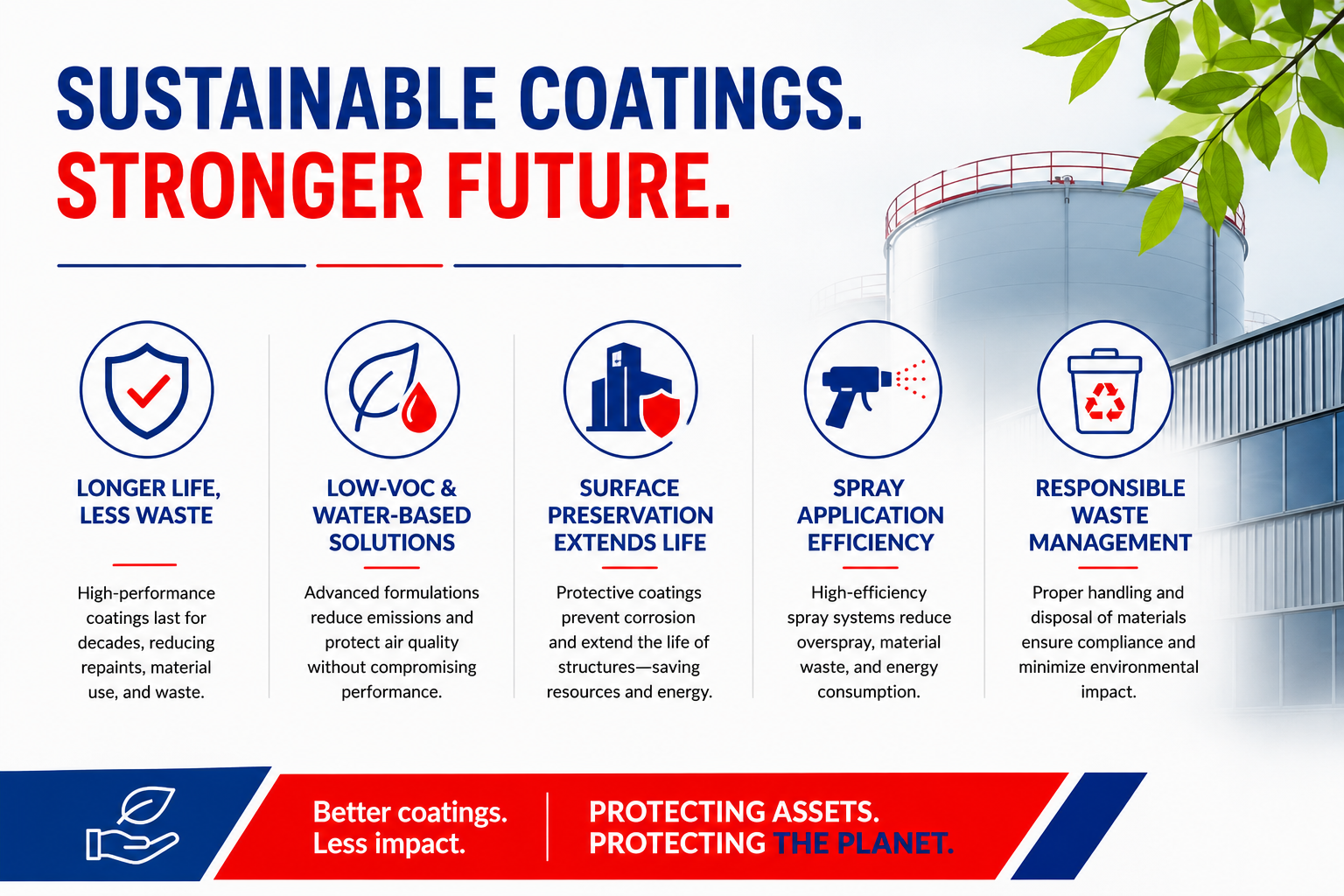
The most sustainable coating system is one that does not need to be replaced. High-performance industrial coatings, when properly specified and applied over correctly prepared surfaces, deliver service lives measured in decades rather than years. Fewer repainting cycles mean less material consumption, less solvent use, less waste generation, and less disruption to the facility’s operations over time.
This is where coating selection expertise matters. Choosing a coating system based on the lowest upfront cost rather than total service life value tends to result in earlier failure, more frequent repainting, and higher cumulative material consumption. Industrial painting companies that understand coating chemistry and exposure conditions help clients make selections that reduce long-term environmental impact as a direct consequence of delivering better value.
Low-VOC and Water-Based Coating Systems
Modern industrial coating formulations have advanced significantly in terms of environmental impact. Low-VOC (volatile organic compound) coatings reduce harmful emissions during application and curing, improving air quality inside the facility and reducing the coating project’s contribution to atmospheric pollution. Water-based formulations offer eco-friendly alternatives for appropriate applications, eliminating the solvent content that historically defined high-performance industrial coatings.
Professional painting contractors in Toronto who stay current with coating technology and environmental regulations can specify systems that meet both performance requirements and sustainability criteria without compromise. The gap between conventional and sustainable coating options has narrowed considerably — and in some application categories, water-based and low-VOC systems now match or exceed the performance of traditional solvent-borne products.
Surface Preservation Extends Building Life
Every year of service life added to an industrial building’s structural components through protective coatings is a year of new construction materials deferred. The environmental cost of producing, transporting, and installing structural steel, concrete, and building envelope components is substantial. Industrial painting that extends the functional life of existing assets is, in direct terms, a sustainability strategy — reducing the demand for new materials and the energy embedded in manufacturing them.
Corrosion prevention, in particular, represents a major sustainability contribution. Corroded steel that must be replaced carries an enormous embedded carbon cost compared to steel that has been maintained through proper coating systems for additional decades of service.
Spray Application Efficiency
Professional industrial painters use high-volume, high-efficiency spray application equipment that minimizes overspray and material waste compared to conventional brush and roller methods. Airless spray systems, when operated by trained applicators, deliver more material to the target surface and less to the surrounding environment. Proper containment systems capture overspray before it leaves the work zone.
The efficiency of spray application also reduces labor hours and project timelines, which reduces the energy consumption associated with aerial lift operation, lighting, ventilation, and other project-related site systems.
Responsible Waste Management
Professional industrial painting contractors operate under waste management protocols that address paint container disposal, solvent handling, abrasive blast media containment, and surface preparation debris. Reputable companies maintain full compliance with environmental regulations governing these materials — ensuring that the sustainability benefits of low-VOC coating selection are not undermined by irresponsible handling of the waste stream the project generates.
Looking for a contractor who takes sustainability seriously? Induspray applies high-performance, low-impact coating systems across GTA facilities. Request a free consultation and estimate.
Surface Preparation: The Foundation of Every Successful Industrial Painting Project
No discussion of industrial painting is complete without addressing surface preparation — the single most important factor in coating system performance. Professional painting contractors in Toronto understand that inadequate preparation leads to premature coating failure, regardless of how sophisticated the coating product itself may be.
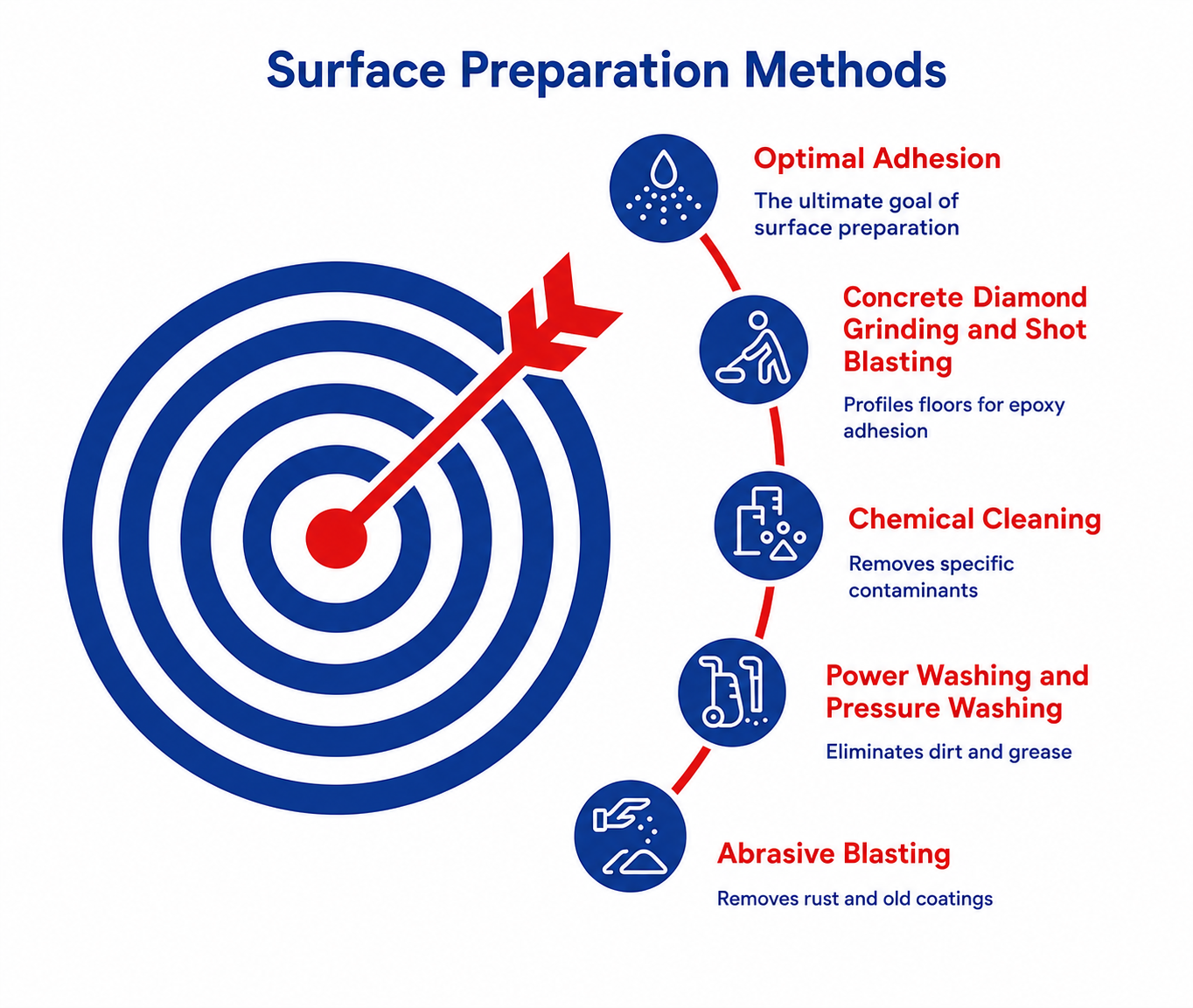
The process begins with a thorough surface assessment identifying contamination, existing coating condition, and substrate integrity. Preparation methods then vary by surface type:
- Abrasive blasting (sandblasting) removes rust, mill scale, and old coatings from metal surfaces, creating the surface profile needed for industrial-grade adhesion
- Power washing and pressure washing eliminate dirt, grease, oil, and water-soluble contaminants from both metal and concrete surfaces
- Chemical cleaning addresses specific contaminants that mechanical methods cannot fully remove
- Concrete diamond grinding and shot blasting profile floors for optimal epoxy adhesion — without a proper profile, even the best epoxy system will delaminate under traffic load
Professional contractors invest in specialized surface preparation equipment and understand the profile requirements for each coating system they specify. Verification of surface cleanliness before application is a non-negotiable step that distinguishes qualified industrial painters from general contractors who treat preparation as an afterthought.
Learn more about Induspray’s sandblasting services and pressure washing services.
How to Select Industrial Painting Companies in Toronto
Selecting the right industrial painting contractor is as important as selecting the right coating system. The following criteria protect your investment and ensure your project delivers the intended results.
Verify licensing, insurance, and certifications. Industrial painting contractors operating in Toronto and across Ontario should carry full liability insurance and workers’ compensation coverage. Safety certifications including confined space entry training, respiratory protection protocols, and fall arrest qualifications, are prerequisites for operating in industrial environments.
Evaluate technical expertise directly. Ask contractors to explain their recommended coating system, surface preparation approach, and application method for your specific facility and substrates. Qualified industrial painters can answer these questions in detail, connecting their recommendations to the exposure conditions and performance requirements of your project. Vague answers about “premium paint” and “quality work” without specifics are a signal to look elsewhere.

Request references from comparable projects. A contractor who has successfully painted a food processing plant, a chemical facility, or a large warehouse can provide references from clients in those environments. Those conversations reveal project management quality, timeline adherence, and the durability of the finished work.
Assess the proposal. Qualified industrial painting companies provide detailed written proposals that specify products by name, surface preparation methods, application procedures, and expected performance. Proposals that describe only square footage and a price — without specification depth — indicate a contractor who is not operating at the technical level your project requires.
Consider the supplier relationships. Painting contractors in Toronto who maintain relationships with major coating and equipment manufacturers have access to technical support, product training, and high-volume pricing that benefits the project. Induspray has maintained these supplier relationships for decades, which is a direct factor in the value delivered to every client.
Evaluating contractors? Induspray provides detailed written estimates, project-specific coating recommendations, and references from comparable industrial and commercial projects. Contact us to get started.
What Our Clients Say
Induspray has earned the trust of over 4,875 clients across Toronto, the GTA, and Southern Ontario since 1975. Here is what facility owners and managers say about working with us:
“Our metal deck ceiling was in terrible condition after many years of service in a heavy manufacturing environment. The paint was dirty and yellowed, peeling heavily, and thick rust was visible in some places. We had doubts it could be refinished adequately, but Induspray proved us wrong. The end result was beyond our expectations, and our facility looks almost like new now, so we could not be any happier.”
“We’ve used Induspray twice now, and both times had great success and were very happy. Will use again if we need more painting done.”
“A professional painting contractor that I would recommend to anyone.”
“A perfect painting job and quick work by talented painters. Found your company on the internet and could not be happier. Thank you again Andrew.”
Industrial Painting Services from Induspray
Induspray has served industrial and commercial clients across Toronto, the GTA, and Southern Ontario since 1975. With more than 4,875 satisfied clients and millions of square feet of coatings applied annually, the company brings technical depth, supplier relationships, and operational efficiency that generic painting contractors cannot match.
Services include industrial ceiling painting, industrial wall painting, epoxy flooring, sandblasting, steel structure painting, silo and storage tank painting, machine and equipment painting, smoke stack painting, secondary containment tank painting, intumescent painting, plural component coatings, pressure washing, dry ice blasting, and coating inspection — covering every surface and system a manufacturing facility, warehouse, or processing plant requires.
If you manage an industrial or commercial facility anywhere across the GTA or Southern Ontario and are evaluating your painting and coating needs, contact Induspray today for a free price estimate and expert consultation.
Call: 416-422-3020 | 1-888-263-9809 (toll-free) Request a Free Quote
Frequently asked questions
How often does an industrial facility need to be repainted?
Service intervals vary by coating system, surface type, and environment. A well-specified epoxy floor can last 10 to 15 years, while exterior metal coatings in corrosive conditions may need attention sooner.
Can industrial painting be done while a facility is operational?
Professional industrial painters schedule work in phases around production to keep disruption minimal. Ventilation, dry times, and preparation are all planned in advance.
What makes epoxy flooring the right choice for industrial floors?
Epoxy bonds directly to prepared concrete, forming a hard, seamless surface that resists chemical spills, forklift traffic, and heavy loads.
How do modern industrial coatings support environmental compliance?
Low-VOC and water-based coating systems now deliver industrial-grade performance while meeting environmental regulations.
How do I know if my facility needs repainting?
Key signs include rust on steel, peeling floor coatings, darkened ceilings, faded safety markings, and cracking on exterior metal.

