Every industrial coatings project depends on what happens before the first coat goes on. For plant and facility managers, choosing between sandblasting and dry ice blasting affects three things: how well new coatings bond, how much cleanup follows, and how long production stays offline.
1. Does dry ice blasting create a surface profile?
No. Dry ice removes contaminants and loose coatings but leaves the underlying surface texture largely unchanged.
2. Is sandblasting an abrasive blasting method?
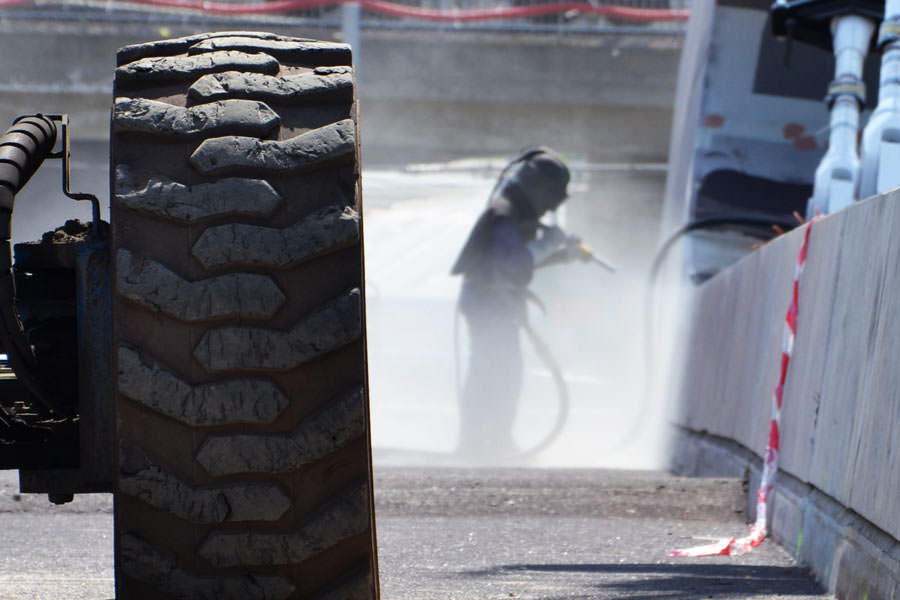
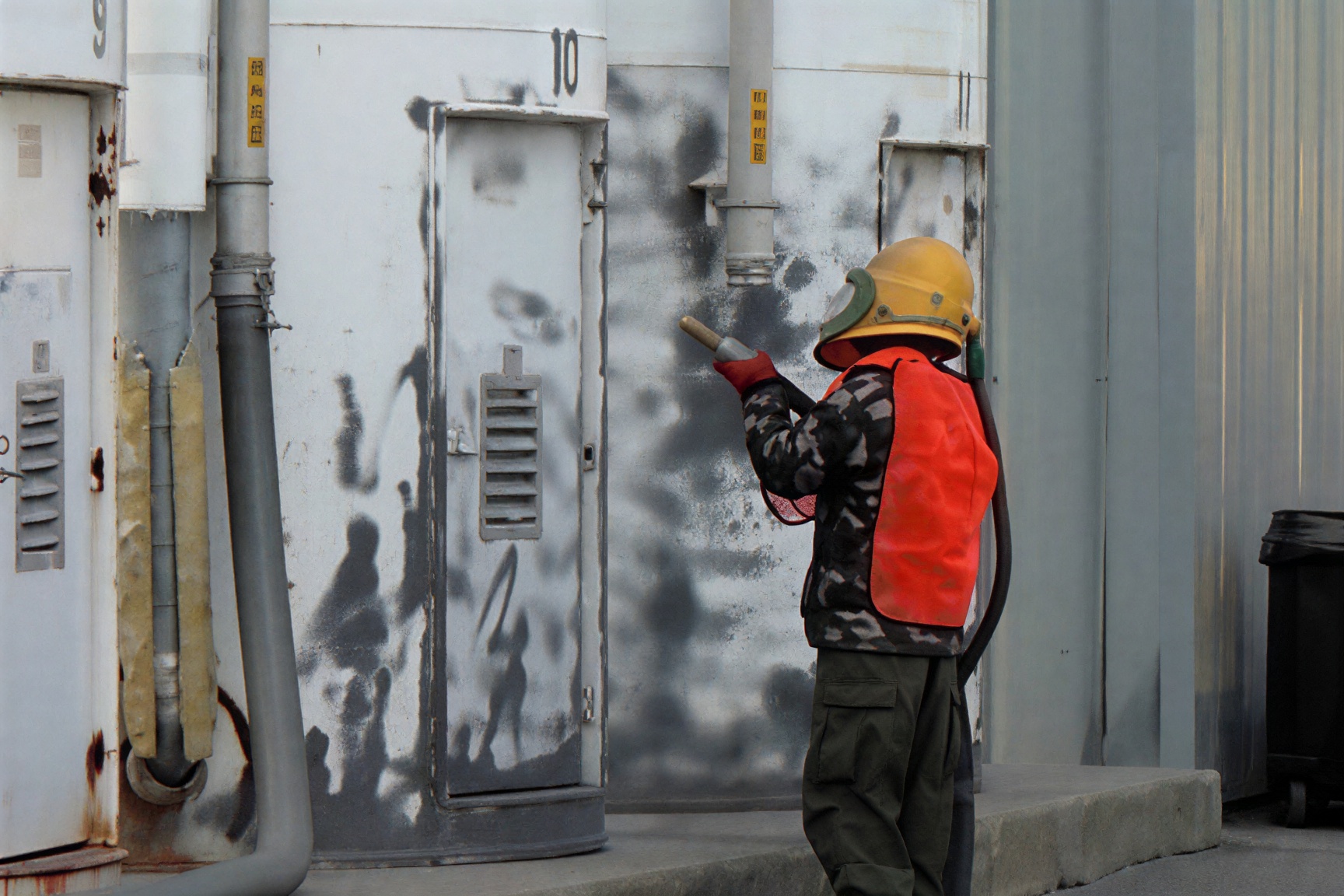
Yes. Sandblasting is one of the most common abrasive blasting methods, and it’s named after sand, the original blast media. Today crews often use steel grit, garnet or other abrasives, but the method works the same way: high-velocity media strips rust, scale and coatings and leaves a profile for new coatings.
Both are proven industrial surface preparation methods, but they work in very different ways. This guide compares them on the factors that matter most inside a working facility.
How Each Method Removes Rust, Scale, and Coatings
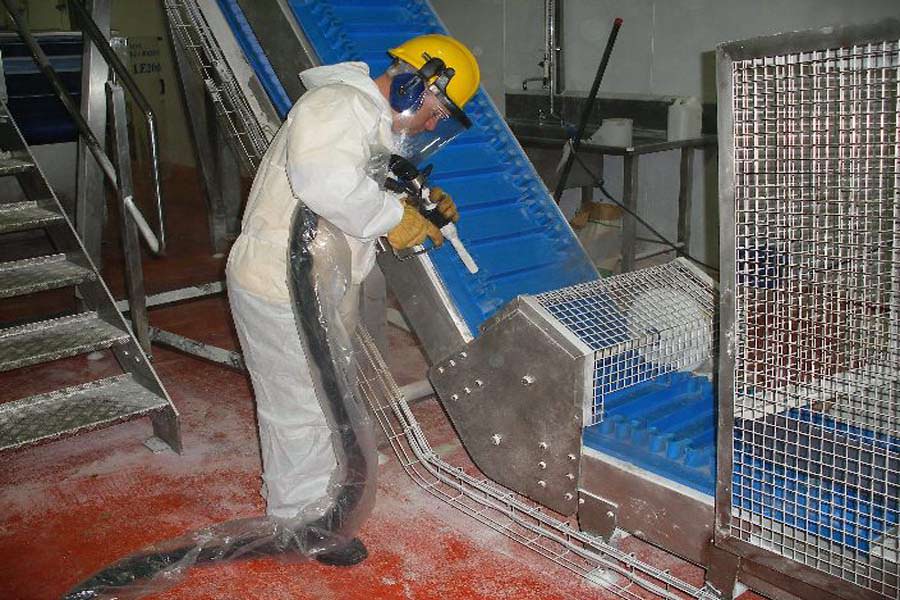
Dry ice blasting fires solid CO₂ pellets at the surface. The cold shock makes contaminants brittle, the impact knocks them loose, and the pellets turn to gas. It handles grease, oil, release agents, carbon buildup, loose paint and light surface rust very well. Tightly bonded mill scale and heavy corrosion usually still need an abrasive.
Surface Profile and Coating Adhesion Differences
Abrasive blasting leaves an anchor profile, a pattern of microscopic peaks and valleys that gives epoxy and other high-performance coatings something to grip. Coatings manufacturers often specify a required profile depth, and sandblasting is how contractors achieve it.
Dry ice cleans without roughening. That works well for maintenance cleaning or for prep over sound existing coatings. When bare steel needs a new protective system, abrasive blasting is normally required. Some projects use both: dry ice to degrease first, then abrasive blasting to set the profile.
Risk of Damage to Softer or Delicate Substrates
Abrasive media can erode thin-gauge sheet metal, seals, wiring, precision-machined faces and mould surfaces. Finer media and lower pressure reduce the risk but don’t remove it.
Dry ice is non-abrasive, non-conductive and leaves no moisture behind. It is used on electrical cabinets, motors, robotics and plastic injection moulds, often without disassembly.
Media Waste, Cleanup, and Reclamation Demands
Sandblasting produces spent media mixed with the removed coatings. On a large silo or steel structure, that volume adds up and needs containment, collection and disposal. If old coatings contain lead or other hazardous materials, the waste may need special handling. Recyclable steel grit systems cut the volume but add equipment on site.
With dry ice, only the removed contaminant is left to collect. The trade-offs are practical ones. Pellets sublimate in storage, so supply must be timed closely to the work. In enclosed areas, CO₂ levels need proper ventilation and monitoring.
Production Downtime and Housekeeping Impact
Dry ice lets crews clean equipment in place, and moulds can often be cleaned while still at operating temperature. Shutdowns tend to be shorter. For full coatings removal across large surfaces, however, dry ice is slower, so sandblasting can finish a big job sooner overall.
Where Each Method Performs Best in a Plant
Sandblasting is the stronger choice for:
- Silos, storage tanks and oil and gas piping headed for a full recoat
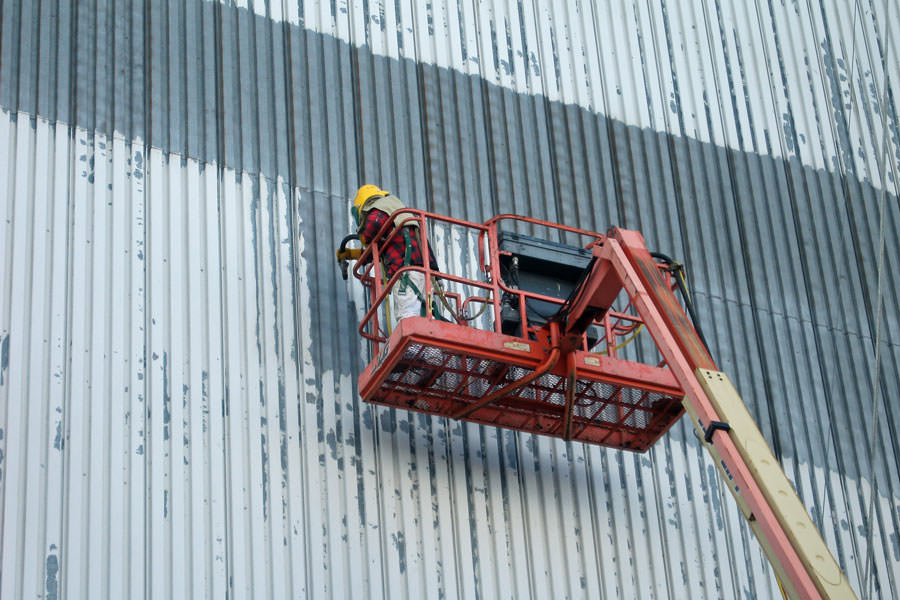
- Structural steel, metal building exteriors and parking garage steel
- Machinery and equipment being stripped for new protective coatings
Dry ice blasting is the stronger choice for:
- Plastic injection moulds, extruders and production tooling
- Automotive and metal fabrication equipment coated in oil or residue
- Electrical panels, motors and conveyors that can’t be taken apart
Choosing the Right Method for Your Next Project
Start with a few questions. Do you need the surface clean, or prepared for new coatings? How sensitive is the substrate? Can the area shut down, and how will waste be handled?
| Factor | Sandblasting | Dry Ice Blasting |
|---|---|---|
| Heavy rust and mill scale | Removes fully | Limited |
| Anchor profile | Yes | No |
| Delicate components | Higher risk | Low risk |
| Secondary waste | Spent media | Removed material only |
| Disassembly | Often required | Often not |
| Best fit | Full recoating of steel | In-place cleaning |
Induspray has handled industrial and commercial painting projects across Ontario since 1975 and offers both sandblasting and dry ice blasting. All of our painters are certified, licensed and fully insured. Request a site assessment, and we’ll recommend the method that fits your surfaces, coatings plans and production schedule.
Frequently Asked Questions
Which method is faster for large structures?
Sandblasting is typically faster for full coatings removal on silos, tanks and structural steel.
Can both methods be used on one project?
Yes. Crews often degrease with dry ice first, then abrasive blast to create the profile new coatings need.
Is dry ice blasting safe near electrical equipment?
It is non-conductive and uses no water, so it is well suited to electrical areas. Standard lockout and site safety procedures still apply.
What information helps when requesting a quote?
Share the surface type, current coatings condition, area size, access limits and available shutdown windows.